.png)
When to Replace Your Car Battery - A Battery Replacement Guide
- Scott Ehler
- Dec 24, 2025
- 3 min read

Your car battery is a vital component that powers your vehicle’s electrical system and starts the engine. Knowing when to replace it can save you from unexpected breakdowns and costly repairs. This battery replacement guide will help you understand the signs of a failing battery, how to test it, and what to expect during the replacement process.
Understanding the Battery Replacement Guide: When to Act
Car batteries typically last between 3 to 5 years, but this depends on various factors such as climate, driving habits, and maintenance. Extreme temperatures, frequent short trips, and leaving lights on can shorten battery life. It’s important to watch for warning signs that indicate your battery is nearing the end of its life.
Some common symptoms include:
Slow engine crank when starting the car
Dim headlights or electrical issues
The check engine or battery warning light on the dashboard
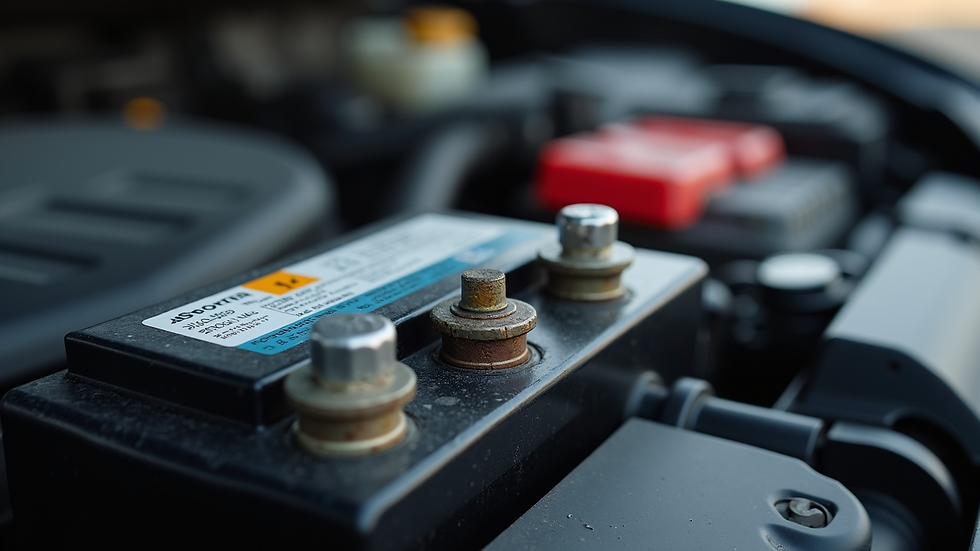
Corrosion or leakage around the battery terminals
A swollen or bloated battery case
If you notice any of these signs, it’s time to have your battery tested. Regular maintenance and timely replacement can prevent inconvenient breakdowns.
How to Test Your Car Battery and Know When to Replace It
Testing your battery is a straightforward process that can be done at home with a multimeter or by a professional mechanic. A fully charged car battery should read about 12.6 volts or more when the engine is off. When the engine is running, the voltage should be between 13.7 and 14.7 volts, indicating the alternator is charging the battery properly.
Here’s how to test your battery voltage with a multimeter:
Turn off your car and all electrical accessories.
Set the multimeter to DC voltage and place the red probe on the positive terminal and the black probe on the negative terminal.
Read the voltage on the display.
If the voltage is below 12.4 volts, your battery is partially discharged and may need charging or replacement. If it’s below 12 volts, the battery is likely failing and should be replaced soon.
Additionally, many auto parts stores offer free battery testing and can advise you on whether a replacement is necessary.

Do I Need to Reprogram My Car After Battery Replacement?
In some modern vehicles, replacing the battery may require reprogramming or resetting certain systems. This is because the battery powers the car’s computer and memory functions. When disconnected, settings such as radio presets, clock, and even engine control parameters may be lost.
Some vehicles may also require a battery registration process to inform the car’s computer about the new battery. This helps optimize charging and prolong battery life.
If you are unsure whether your car needs reprogramming after a battery change, consult your owner’s manual or ask your mechanic. Many newer cars have specific procedures that must be followed to avoid warning lights or performance issues.
Tips for Choosing the Right Replacement Battery
Selecting the correct battery for your vehicle is crucial for optimal performance and longevity. Here are some tips to help you choose the right one:
Check your owner’s manual for the recommended battery size, type, and specifications.
Consider the cold cranking amps (CCA) rating, which indicates the battery’s ability to start the engine in cold weather. Choose a battery with a CCA rating that meets or exceeds your vehicle’s requirements.
Look for a reputable brand with good warranty coverage.
Consider maintenance-free batteries that do not require topping off with water.
Compare prices and warranties from different retailers or service centers.
Proper installation is also important. Make sure the battery terminals are clean and tight, and that the battery is securely mounted to prevent vibrations.
How to Extend the Life of Your Car Battery
Once you have a new battery installed, you can take steps to maximize its lifespan:
Avoid frequent short trips that don’t allow the battery to fully recharge.
Turn off all lights and electrical accessories when the engine is off.
Keep the battery terminals clean and free of corrosion.
Have your charging system checked regularly to ensure the alternator is working properly.
Use a battery maintainer or trickle charger if you don’t drive your car often.
By following these simple tips, you can help your battery last longer and reduce the chances of unexpected failure.
When to Seek Professional Help for Battery Issues
If you experience persistent starting problems, dim lights, or warning lights on your dashboard, it’s best to have your battery and electrical system inspected by a professional. They can perform comprehensive tests and recommend the best course of action.
Remember, timely car battery replacement can save you from being stranded and protect your vehicle’s electrical components.
Taking care of your car battery is an essential part of vehicle maintenance. By recognizing the signs of a failing battery, testing it regularly, and choosing the right replacement, you can keep your car running smoothly and reliably.


Comments